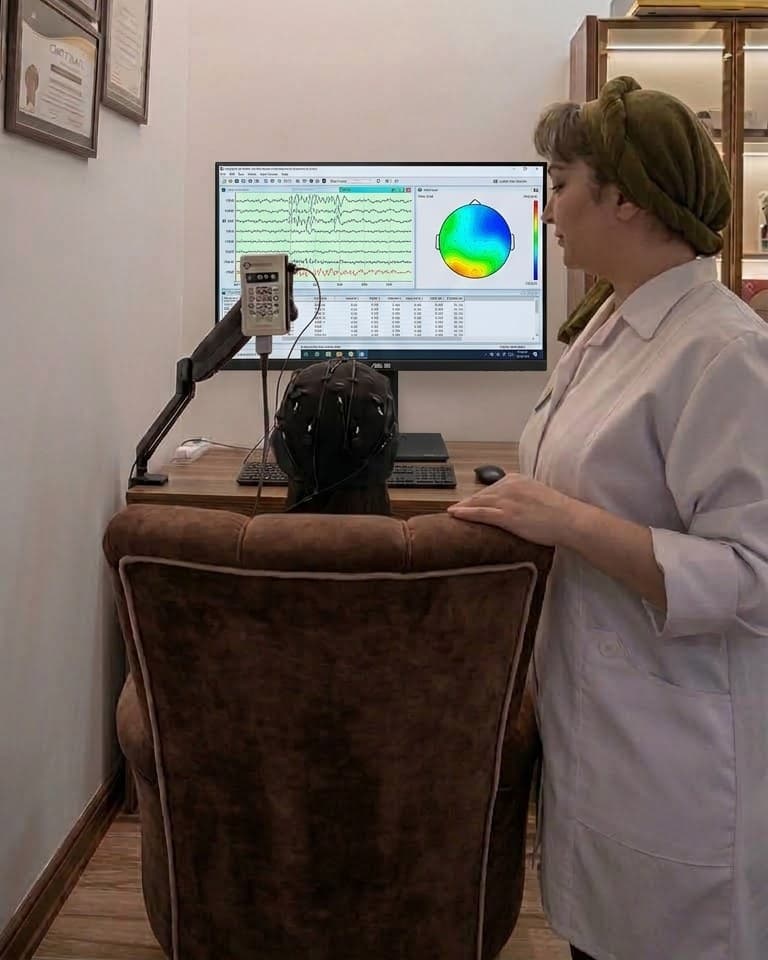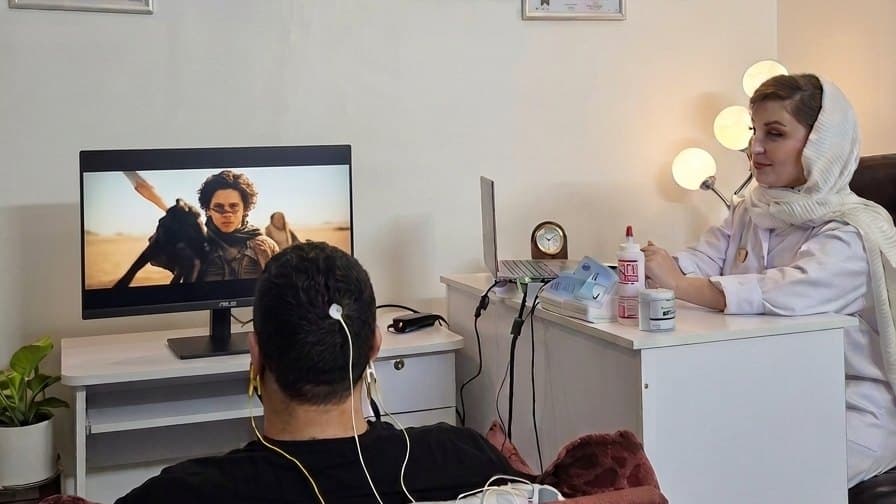
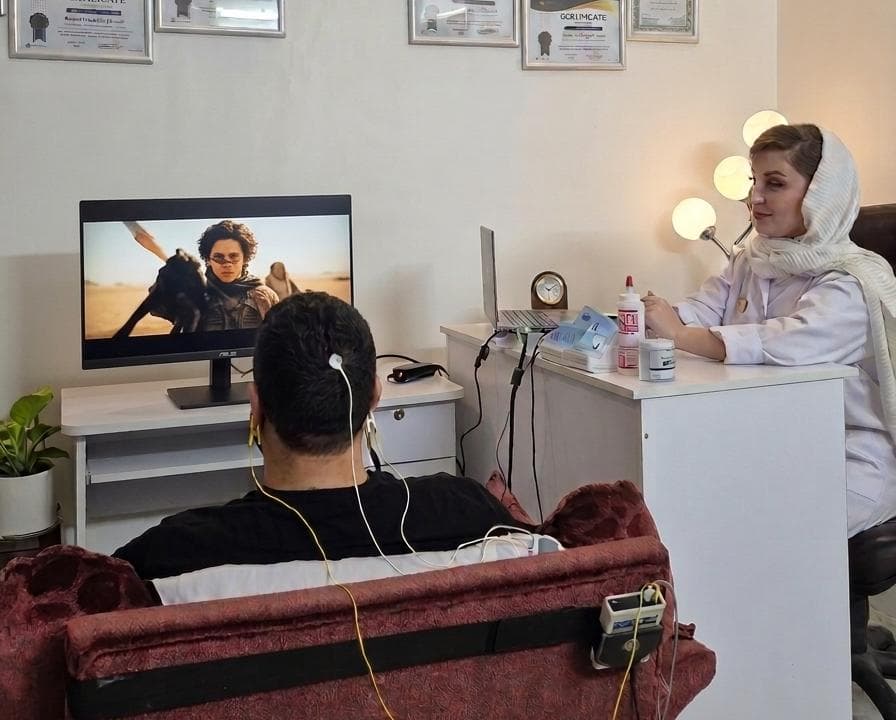
You sit in a comfortable chair. A few small sensors are placed on your scalp and ears. They only read the brain’s activity; nothing is sent into the brain.
What Does Real-Time Feedback Mean?
A video or game plays on a screen. Whenever brain activity moves towards the target pattern, the picture becomes clearer and the sound gets louder—and the reverse happens when it moves away. This real-time feedback is what the brain learns from; you do not have to consciously “do” anything.
Where Does the Training Target Come From?
It comes from your own brain map. A QEEG assessment helps identify which region and rhythm may be trained. That is why two people with similar complaints may receive very different training plans.
What Should You Expect?
Each session takes about 45 minutes. Changes are usually gradual and are reviewed through repeat recordings. If the brain’s response points elsewhere, the plan may be adjusted or brought to an end. Neurofeedback is not suitable for everyone; suitability is determined after assessment.
A Clinical Example: ADHD and Attention Challenges
QEEG brain mapping may be used as part of the assessment of attention-deficit/hyperactivity disorder (ADHD) in Mashhad.
ADHD is not simply a high level of physical activity. The central challenge can involve sustaining attention and organising everyday tasks. This can affect children’s education and adults’ work.
At Neuroxim, decisions are not based on outward behaviour alone. A QEEG brain map can be used to examine the ratio of theta and beta waves.
- Children and adults
- Assessment of theta and beta waves
- A drug-free training approach
- Focus training through neurofeedback
A Three-Step Path to Assessing and Supporting Focus
- QEEG brain mapping — a detailed measurement of 19-channel electrical brain activity at rest and during a mental task.
- Clinical assessment and brain mapping — reviewing brain waves and clinical patterns to better understand the source of attention difficulties.
- An individual protocol — a self-regulation training plan tailored to your specific needs.
This article is for educational purposes only. It does not replace an individual assessment, diagnosis or consultation.